Accredited Fire Risk Assessments in Schools

6th November 2024

Sofa Sessions H&S and Fire

Share this post:

 
Accredited Fire Risk Assessments in Schools

This blog is based on Judicium’s Health and Safety ‘Sofa Session’ from the 6th of November, with our resident expert Isthar Pearce CMIOSH. This session focused on what is a BAFE-Accredited Fire Risk Assessment? The key responsibilities of school leadership and common fire safety challenges in schools.

    The Importance of BAFE-Accredited Fire Risk Assessments in Schools: Key Leadership Responsibilities and Overcoming Common Challenges

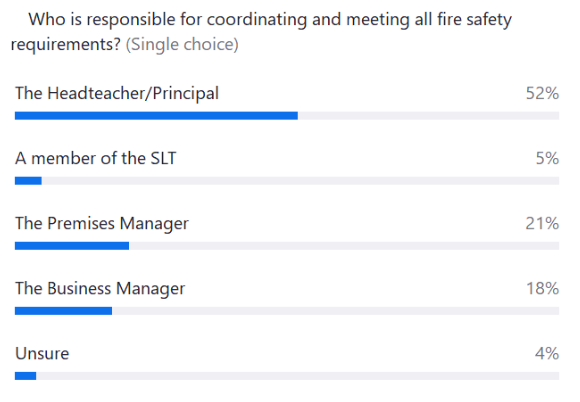
    Poll 1
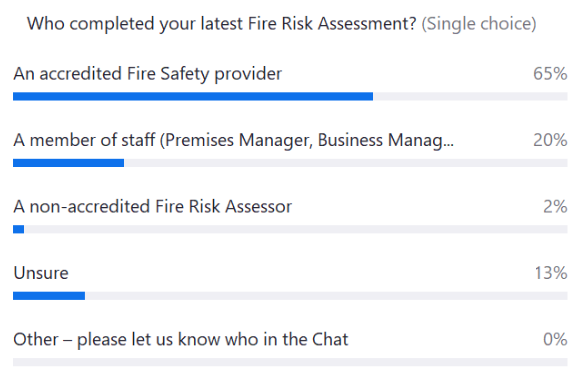
    What is a BAFE-Accredited Fire Risk Assessment?

    BAFE accreditation ensures fire risk assessments meet the highest industry standards, providing schools with thorough and compliant evaluations. Schools can confidently meet their legal obligations by working with accredited organisations, reducing the risk of fires and their potential consequences. FRAs help identify fire hazards and risks, such as outdated management systems, faulty equipment or improperly managed fire doors and provide recommendations to mitigate those risks.

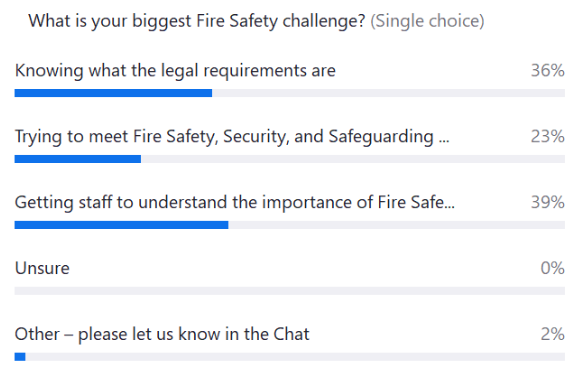
    Poll 2

    The Role of School Leadership in Fire Safety

    School leaders play a critical role in fire safety by ensuring that competent individuals are appointed to oversee fire safety management. Legislation such as the Regulatory Reform (Fire Safety) Order 2005 lays a framework to ensure that senior managers are responsible for fire risk assessments, evacuation plans, and fire drills. Principals/Headteachers are also responsible for ensuring that Fire Safety information is kept; if they were to leave the school, they need to ensure that fire safety information is communicated to their successor. 
    Effective leadership has been proven to reduce the risk of fires, saving schools from potential life and premises damages and costly fines. All this leads to better staff morale and ultimately better performance.

    Poll 3

    Overcoming Common Fire Safety Challenges

    Schools often need help to keep fire safety measures up to date, especially when they rely on outdated or incorrect advice. Regularly updating fire risk assessments, evacuation plans, and fire safety policies is essential to ensure compliance. Additionally, managing all fire safety and premises equipment, such as fire doors and conducting regular equipment checks and inspections are key aspects of a robust fire safety plan. Changes in school premises can also introduce new fire risks if fire safety measures are not reviewed. Whether it’s the installation of new equipment or changes to classroom usage, it’s crucial to reassess fire safety needs to ensure risks are managed appropriately.

    Conclusion

    The session highlighted the importance of staying proactive in fire safety management. BAFE accreditation ensures fire risk assessments meet industry standards, but the school’s leadership must be the driving force behind managing and maintaining fire safety compliance. By addressing common challenges and regularly updating fire safety procedures, schools can protect their premises and the people within them.

      Top Tips

      1. BAFE accreditation ensures the quality of FRAs
      2. Leadership plays a critical role in maintaining fire safety compliance
      3. Regular updates to fire safety procedures are essential.

      Helpful Links:

      The Regulatory Reform (Fire Safety) Order 2005

      Judicium Education’s Health and Safety Advisory Service is designed to support schools, firstly, in ensuring a safe working and learning environment, secondly, in complying with the legal requirements imposed on them as employers under the various Health & Safety laws and regulations. For more information, please visit here.

      If you require any support in any of these steps, or would like to talk to someone surrounding some support for your school please do not hesitate to call us on 0207 336 8403 or email Georgina.decosta@judicium.com.

      The Health and Safety Service is also providing accredited training courses, including eLearning with specific modules ranging from courses designed for premises managers and SLT to all staff offerings and fire warden training: https://www.judiciumeducation.co.uk/elearning

      We also offer live, exclusive training options: https://www.judiciumeducation.co.uk/training

      To review Judicium’s forthcoming sofa sessions please click here.

      Follow us on Twitter - @JudiciumEDU

      © This content is the exclusive property of Judicium Education. The works are intended to provide an overview of the sofa session you attend and/or to be a learning aid to assist you and your school. However, any redistribution or reproduction of part or all of the contents in any form is prohibited. You may not, except with our express written permission, distribute or exploit the content. Failure to follow this guidance may result in Judicium either preventing you with access to our sessions and/or follow up content.

      Related content

      October 2026 Changes Schools and Trusts Need to Prepare For

      25th September 2026 | HR & Employment Law | Employment Rights Act

      October 2026 Changes Schools and Trusts Need to Prepare For

      In this blog, we consider how the reforms to trade unions, employment tribunal claim times, and employer liability to prevent harassment will affect schools, and how to prepare for the forthcoming changes.

      Read full article →

      The Hidden Risks Sitting on your School Register

      23rd September 2026 | Sofa Sessions | H&S and Fire

      The Hidden Risks Sitting on your School Register

      Your risk register might be hiding risks that only come to light when it causes costly disruptions. Get ahead by reading our latest blog.

      Read full article →

      Streamlining Your Payroll Process for Efficiency and Compliance

      16th September 2026 | People Matters | Payroll

      Streamlining Your Payroll Process for Efficiency and Compliance

      Payroll is one of the hardest jobs to get right in a school or academy trust. This blog sets out seven practical ways to make payroll run more smoothly to cut errors, save time and help your staff trust their pay.

      Read full article →